Really cheap in-laws
Money did not seem to be much of an issue for Marie-Hélène and me at first, and I barely paid it (tee-hee!) any mind. For one thing, we seemed to be fairly even in assets. In fact, Marie-Hélène’s independent situation was significantly better than mine. When her mother died in 1991, her property was bequeathed to her and Denis, her brother, with her father retaining a life estate until he died. Translated out of legalese, that meant that Marie-Hélène owned half of two apartments in the 17th arrondissement in Paris, and half of a commercial space in the 9th arrondissement that used to be her father’s photography studio. Rental income on these properties goes to her father during his lifetime, supplementing his State pensions. There was also La Grée in Brittany, itself owned by her family.

I had nothing at the time in my name when we moved in together in 1994, but it was understood that Sue (my sister) and I would split mum’s home, life insurance and equities after she died. When that happened in 1996, I guesstimated that Marie-Hélène’s share of her family’s French real estate was about $350K, and my share of mum’s estate turned out to be about $225K, all inclusive. Marie-Hélène also brought some nice furniture to Le Tahu, something which I had little of, and things generally looked okay between us at the beginning. Apparently, it was not going to be a one-way street.
Both grandparents also helped us out initially. Our children only had two: my mum and Marie-Hélène’s dad. Missus (that was what she liked us to call her) was constantly helping us out with little (and often big!) gifts. Grand-père hosted us as often as we wanted at La Grée, the country cottage in Brittany where he had retired. No gifts worthy of note, but his hospitality was gratifying.
As for Marie-Hélène’s and my revenue, it was tacitly understood that with four and then five children to look after most of the time, she would not return to work after leaving Paris to move in with me. She had made her own living during her nine or so years with Pierre, but preferred to look after the children herself. I was fine with that. Young children need as much parental presence as they can get, and I suspect that maternal presence feels better for them.
My revenue was not great, because I’d never found a firm to replace Jack Kevorkian’s. One of the bigger US firms had been interested, on two different occasions, but each time it didn’t quite work out. That mattered little, at least at first, because my clients at Jack’s firm had followed me when I left in 1992, much to his surprise. Until 1996, I earned a comfortable living.

I also had the feeling that money was the key reason that Marie-Hélène had finally left Pierre, Daphné’s and Alban’s father. Not that I had a whole lot of it, but Pierre remained either very cheap or very poor. I’m pretty sure that it was the former, and that he had and has a cash horde hidden away somewhere. Tax avoidance in France is often about hiding revenue, which is done by doing deals in cash and under the table. That’s where I think that Pierre lived and worked, under the table. What remained of his cash (and he is a master at avoiding expense such as taking care of his own children!) accumulated and ended up in a cashbox somewhere.
But Marie-Hélène was convinced that he was completely broke, and was clearly beginning to worry about Daphné’s and Alban’s future if they depended on him. One day during their parents’ later period together, the children had wandered off from the café where the parents were chatting over coffee and set up shop as beggars on the local pedestrian market street, asking for spare change. That must have worried their mother!
* * *

So what went wrong between us on a financial level?
Well, if you ask Marie-Hélène she will tell you that I didn’t earn enough in 1996, which is true. My biggest client, Immunotech, had been sold to a US multinational in 1995, and as often happens in such a case the acquiring company did not need the acquired company’s lawyer, just as it didn’t need the acquired company’s management for very long. I had been working with Immunotech’s management for five or six years. I also like to think that I had, after all, benefited my clients a fair bit during the sale negotiations, at the acquiror’s expense!
As a result of this slump in business only two years after Marie-Hélène and her children moved in, I started spending my inheritance on our new family. Missus passed away in July 1996, and pieces of the inheritance were available with alacrity.

Was that really necessary? No. We could have cut back in the face of my reduction in income by not living in our much loved and enormous if dilapidated manor house, La Bellanderie, for example. Denis, Marie-Hélène’s brother, and his family had lived rent-free in the larger family apartment in Paris 17ième for a year or more after they had run into financial adversity. Perhaps this and the smaller apartment in the same building could have been a possibility for us, just to tide us over, if I had asked Marie-Hélène to pursue them.
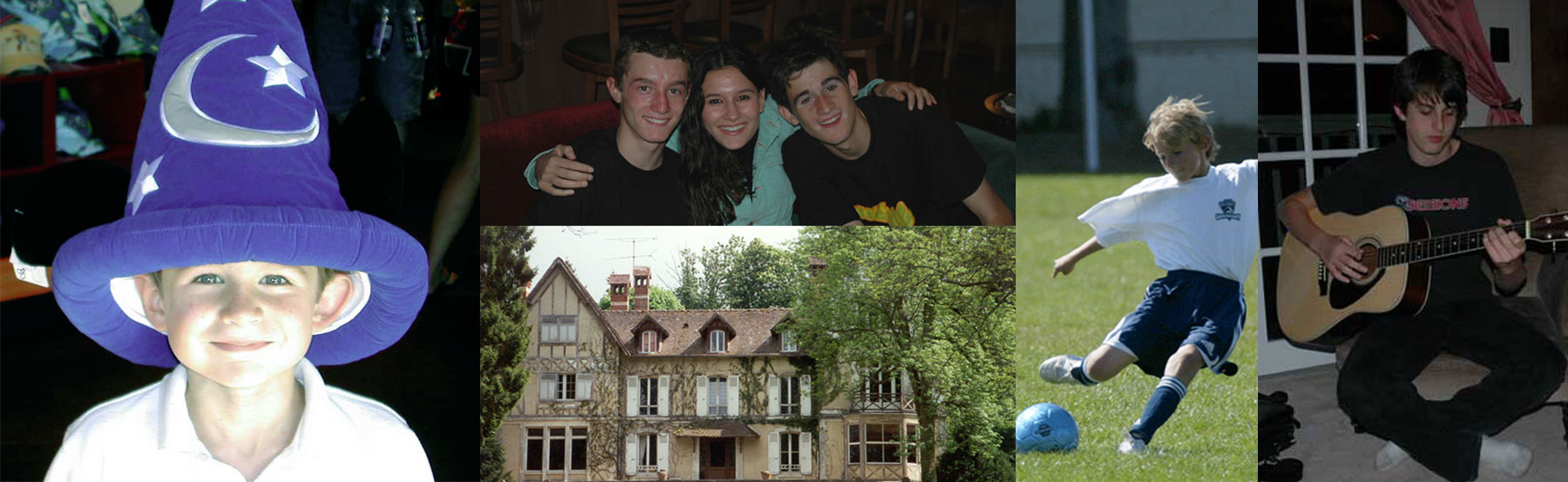
But I didn’t. The children were still in a maelstrom outside our home, where Sunshine (my ex) and Pierre continued ranting and raving around them and us without any respite. I wanted to make things as easy as possible for the seven of us (Charlie arrived in 1995) as possible. We could all have lived in that four-room apartment (“quatre pièces”) in Paris, but it would have been tight, even if the studio in the same building was somehow also available. Revved up children bouncing off walls in a four-room apartment in central Paris would have been harder to handle and live with than revved up children bouncing around a 14-room manor house in a forest complete with several acres of grounds.

In short, it was easier to spend the inheritance. Mum had been the biggest fan of our new family, and had spent what felt like a small fortune on us during her lifetime. Two years running, she gave us all annual passports to Disneyland, which was only an hour’s drive from where we lived and was the family’s favorite distraction. We never paid for the plane or ferry tickets to visit her in Marlow. By her example, her instinctive Irish generosity, she had demonstrated that she would not object to my spending a portion of what she left for me on easing life for the seven of us.
Marie-Hélène was already blaming me for not earning enough that year, and certainly wasn’t going to volunteer to do anything to reduce our costs. I didn’t even mind being the path of least resistance: being able to chip in even though my practice had tanked was the silver lining of the cloud around mum dying..

In short, I was fine with spending and spending my separate property. Until, that is, our wedding and its aftermath, which abruptly gave me pause. This was late spring in 1997, about a year after the inheritance started being spent.
For one thing, neither grand-père nor his brothers gave us a wedding present. Marie-Hélène had never been married, even if she did have children and an ex, and so her father had never been asked before to help her on her way. Neither had his brothers. Here was their opportunity, and the four brothers did absolutely nothing on the present front for their daughter and niece.
Good Catholics all,her father and his brothers couldn’t simply wash their hands of family duties. No, they satisfied their undemanding consciences by jointly sharing the costs of the food served at the reception. Of course, the reception was held in the house that we were renting, and we paid for everything other than the food (such as clothes for us and the children) ourselves. Again, you’d think that the sole surviving parent could have done something more substantial for his only daughter’s only wedding. But no, he managed to avoid paying for any child’s wedding at any time in his life. Having covered one quarter of the food served at a reception for maybe 35 people, he was done.
I didn’t make much of that omission at the time because doing so would have focused on something that was obviously very hurtful to Marie-Hélène. I didn’t want to rub it in. What daughter wants to be all but abandoned for her own wedding? Grand-père, you should be ashamed of yourself!

In fact, we never received anything of substance from any member of Marie-Hélène’s family, and this after my mum had been very kind to us all. In fact, one of her explanations for her father’s cheapness, which at times obviously embarrassed her, was that her mother was no longer with us. That must have been true on some level, but the explanation didn’t help me as I began to realize how truly stingy her father was.
He never sent birthday or Christmas presents to his grandchildren or his daughter. “I don’t do presents,” he would say, as if this callous and selfish statement was itself some kind of explanation. It wasn’t. I didn’t get it. Don’t the French read Dickens’ Christmas Carol?!
I still don’t. Sixteen years of no birthday or Christmas presents for any of our children from their good Catholic grandfather!
What’s the point in playing the organ in the parish church for Sunday mass, as grand-père did for years, if Christian charity escapes you, even when the beneficiaries would be your own children and grandchildren?
The only way that Marie-Hélène and I could convince him to offer gifts to his grandchildren was with a delicate campaign of persuasion, identifying the recipient and the need and helping him choose the gift in person. We did do that every once in a while (he bought Charlie and Alex bicycles at La Grée one year, for example) just so that we could tell the children that their grandfather was looking after them.

But it was barely true. And we didn’t have the energy to mount such a campaign more than two or three times during our 16 years together. When Charlie and Alex looked back as teenagers, they joked about how much they appreciated the 20 Euros that grand-père gave each of them one summer. That was it in their memories: 20 Euros each, one summer.
Looking back, the biggest discord I see is how this sweet and kind looking man could have been so selfish and cheap with his loved ones, to the point where the love itself was cast into doubt. You look at him, see him putter around his cottage, nodding off after his lunchtime glass of wine, still seated at the dining table, and he appears warm and kind, the perfect grandfather. Then you do the math, and you hear the lines: “I don’t do presents.” His appearance and style conflicted so much with those stingy and unforgiving words that the words themselves became almost impossible to believe. But they were the truth, for at least 16 years.

Ultimately, I felt bad for Marie-Hélène, having such an unkind father as her only remaining parent. He even managed to give a nice piece of her mother’s jewelry, which her mother herself had personally asked him to give to Marie-Hélène, to a good Catholic cousin whom he liked and Marie-Hélène didn’t.
There was nothing that I could do about that paternal meanness (and grand-père essentially stole those jewels from his own daughter) except shield her from the consequences by picking up the slack. So I did. But it began to rankle as my inheritance was frittered away.

Everyone involved knew that Pierre Brown was doing very little if anything for his children, and hopefully that they (and my children) thus needed support, emotional and financial. Marie-Hélène’s side of the family buried its collective head in the sand. Again, the children rarely received a letter, a card or even a fax. Eight birthdays every year, Christmas every year, passed by with no gifts for any of the children from my in-laws. Only Tante Lucette (who had married into the family) showed us spontaneous kindness on a regular basis.
* * *
By the time frittering away my inheritance had stopped, I had used the balance as a down-payment on our new home in Santa Cruz. Missus would have been delighted to help us get settled here.
I had hoped to have a down-payment on a vacation rental too, up in the Sierra Nevada. Russ and I had gone looking up there a few months before the family moved to Santa Cruz, but there was nothing left, literally, after covering the costs of the move and settling in.
“So be it,” I thought to myself, “at least there was enough to enable us to move to California.”

Don’t get me wrong. I spent some of the money on special treats for me and the family, treats like the stay we had in New York City on our way from St Hilarion to Santa Cruz, and like the Amtrak train ride across the entire continent, from New York to Oakland via Chicago.
But the absence of any reciprocal gestures from Marie-Hélène or her family made me begin to resent what I did spend out of my modest inheritance on the day-to-day expenses of our blended family.
* * *
My earnings improved as we settled into Santa Cruz, over the hill from Silicon Valley, which was in a boom phase until 2000. I basically forgot the way that we had been treated at the wedding, and the way grand-père continued without pause to treat the children. What was the point? If this was how they were made, there was no point in stressing the injustice and meanness when the children might pick up on it. Perhaps they wouldn’t notice if we didn’t make an issue out of it.
Somewhere inside, I was sure that Marie-Hélène would do the same thing that I had done if the need ever arose.
See what I mean when I call myself an idiot? Typically in life, the fruit falls close to the tree. When her father and other family members were unpardonably cheap, even with their supposed loved ones, why would I have expected Marie-Hélène to be any different? But I did, and was terribly disappointed when I finally did ask her to contribute, The request met with a stubborn refusal, of course. Never mind: I survived Silicon Valley busts and even a lay-off without another dramatic reduction in revenue. Life continued on.

In 2000, I gave her a small bequest (around $7,000) out of my Great-aunt Alice’s estate, and asked her to deposit it in her account in Paris, expecting to spend it in Europe on something special for the family during one of our regular summer visits. When I asked after it about a year later, she told me that it had all gone. On what was never clear. She might have spent some of it on our wonderful family vacation in 2001, St Malo and Marlow and the rest, but we paid for most of that from the US, as usual. My money in her Paris account had just gone. She never would show me the bank account statements of where it went. Apparently, it was none of my business!
Idiot again: I was not getting the message. Is that what they call denial?
Finally, during the summer of 2002, I got the message, from a couple of unfortunate events. They were not really that significant, but made me feel awful as how I was being treated financially sank in. The rose-colored glasses of romance would no longer block my vision.

The first event was completely unexpected. We had decided that we would visit Oncle Alain, Marie-Hélène’s doctor uncle in Autun in central France, during our summer vacation that year. When we moved to California, Oncle Alain had been kind enough to offer to store the ten cubic meters of furniture and personal effects that we were not taking with us.
Most of this furniture were things that I had brought into the relationship. Also included were many appliances that would not be usable in the US, like the nice Bosch washer and drier, the GE fridge freezer (in the American side-by-side style), and the Sony TV and multi-system VCR (for playing videocassettes from the UK, US and France: DVDs had barely arrived at this point!). The GE fridge freezer was particularly close to my heart, because it was the last gift that mum had made to us before she died, and a very expensive gift at that. All of these appliances were gifts from my side of the family, and the furniture was all my property from before this relationship.

Oncle Alain warmly welcomed us to his home, but when we looked in the grange where these ten cubic meters of furniture were being stored for us, they were not there!
Only the GE fridge freezer was there, and it had a dent on the side and had clearly been used for years. The deal was supposed to have been that our things were in storage for us, and not to be used. In any event, there was nothing else in the grange that I recognized.
It was the first night of our summer vacation, and I couldn’t believe my eyes. Or my ears. When I complained to Marie-Hélène and asked her where everything was, she told me that there was nothing there! I still have the shipper’s invoices for this ten cubic meters, which were delivered to Oncle Alain in June of 1997.
The way that Marie-Hélène was backing up her uncle, who looked like a common or garden thief to me at this point, scared me. She continued to back him up right through the divorce, sending me occasional proof of his good works for the Church and charities, as if these somehow absolved him from stealing my property. I guess that she was so accustomed to my being an idiot about money that she thought that she could convince me that I imagined the whole thing!
She had warned me about his miserly tendencies before we discovered the theft. According to her, he turned his cash into gold and stored his gold at the local branch of the Banque de France. He had complained bitterly, she had told me, giggling, when the Autun branch was closed permanently, because it meant that he had a trip each way to deposit and visit his personal hoard of gold.

Oncle Alain gave generously of his time to the Catholic church in Lourdes, where my Aunty Margaret used to go regularly in a futile search for cure for her cataracts. His role there was as a Doctor checking for miracles. Don’t know if he ever found one, but I found one in his grange. Sans effort, Oncle Alain a fait disparaître dix mètres cubes de meubles, électroménager et effets personnels: quel miracle! Oncle Alain effortlessly made ten cubic meters of major appliances and personal effects miraculously disappear!
We next visited Tante Lucette, Marie-Hélène’s adorable aunt (by marriage) down in Six-Fours on the Mediterranean coast. The surreal scenes at Oncle Alain’s prompted me to ask, finally, for signature authority on Marie-Hélène’s bank accounts in France. Logically enough, I had not had this before we were married, and we moved to the US right after. I had not done so after Aunt Alice’s bequest went missing, for reasons which I cannot fathom looking back. Perhaps I thought that it was too late for that money, and that I would simply avoid giving her any of my own money in the future. But Marie-Hélène had signing authority on every account that I or we opened in California, and I figured that after five years of sharing everything, my separate and our community property, it was time for a little reciprocity here.
I asked in front of Tante Lucette, because I was already worried that Marie-Hélène was going to somehow justify a refusal, and wanted a benevolent older relative there just in case. Marie-Hélène gave me a flat no. And, of course, it was all my fault. I had frittered my money away, she asserted, and she did not want to risk my frittering her money away too.
How could she act this way? I pointed out in the ensuing “discussion” (I was obviously furious) that she had signing authority in any event in the US, on everything, whatever her personality flaws. To my mind, that was the nature of marriage. She had had signing authority on my separate property in our bank accounts in 1997, and she used it and spent my separate property. She was a big help in frittering away my inheritance, spending and spending on the children who were with us. (Nick and Tom were held back by the courts in France, with the effect that the later portions of mum’s estate were not spent on them at all). Even if later she blamed me alone for the disappearance of this money, on the ground that I should have been earning more, she fully participated in the frittering.

Marriage is a partnership, and both parties contribute. By refusing me signing authority on her accounts in France, Marie-Hélène refused to make any contribution herself after having accepted a six figure contribution from me. Tante Lucette was horrified: I could see it in her eyes. But she could or would not do anything to talk her niece out of her position. Or if she did so out of my sight, her intervention made no difference.
* * *
Needless to say, Marie-Hélène had budged not an inch before the end of the marriage. Flexibility, compromise and sharing are not her forte. She continued to have access to all of my money from whatever source derived, and I continued to beg for crumbs from her, symbolic gestures, anything to demonstrate a real partnership.
But I didn’t really believe in the partnership after 2002. It took me a while to surmount my own denial, but her uncle stealing my furniture, appliances and personal affairs pushed me over the hump. Marie-Hélène never even tried to fix that grotesque theft, at least not in front of me. She just wanted to stop me complaining about it and remained, as always, fiercely loyal to her family of origin, a loyalty which even I was beginning to realize was hardly ever applied to me. Most distressing was her holding me responsible for her inability to share as I had done. It was so obviously a rationalization, and yet she was so convinced of its truth. I had a tendency to fritter money away, she explained. So now helping our family out in its hour of need justified treating me so badly: I might fritter her money away on our family!
That’s how a cheapskate is developed, I suspect: the inherited genes predispose the individual, and she then finds reasons to implement the predisposition and ignore the example of generosity, from which she had benefited a great deal and which could have lead her in another direction.
* * *
So with little change over the following years in our respective approaches to money, we came to the end of the cold tunnel that our lives as a couple had turned into, and I moved out. Then it was time to do the accounts. Divorce in the US is principally an accounting matter. Feelings of betrayal and disappointment, of anger and pain, are reduced to a protracted debate about money and property.

It was in divorce mediation that I discovered the most adverse consequence of helping out our family with my inheritance all those years ago. California law was not on my side. The house had doubled in value since I used $75,000 of mum’s estate to pay the down payment. But California law denied me any corresponding return on my investment. So when the house is sold I will receive the first $75,000 after the mortgage is paid off. The balance of the equity in our home is community property, to be split between the two of us.
Needless to say, Marie-Hélène does well out of this split, because her separate property had appreciated to the same extent as our home, to the same extent as the vacation rental in the Sierra Nevada that I would have bought if mum’s inheritance hadn’t been frittered away. And I have no claim to this appreciation in her property, although she takes half of the appreciation in mine in our home.
Her Oncle Alain did even better, of course, professional gold hoarder that he is. I assume that he either sold my stuff or gave it to his children, to defer expenses he might otherwise have had. I also assume that its value in the aggregate was the $8,000+ which we insured it for, and that he invested in gold what he saved or didn’t spend as a result of helping himself to my things. Gold was $290 per ounce at the end of 1999, giving him plenty of time (over two years) to reap the financial benefits from my affairs. It was $1400 an ounce by the end of 2010. Not a bad little 380% profit from his stealing!
Both Marie-Hélène and her Oncle Alain are good illustrations of why cheapskates are the way that they are: greed. It’s as simple as that.
* * *

One footnote: another less visible consequence of our different approaches to money. During the course of our relationship, my separate property depleted from around $200,000 to $75,000, and Marie-Hélène’s appreciated from $350-400,000 to $700-800,000 (I’m less aware of French real estate values nowadays, but this seems to be the ballpark). From Charlie and Alex’s point of view, that relative change made no difference. Whichever of their parents has the separate property will not affect their entitlements. But Nick and Tom now have an expectancy of $18,750 each out of my separate property, and Daphné and Alban now have an expectancy of maybe $175-200,000 from their mother’s.
Our marriage has served to transfer money and property from my children to hers: another good illustration of why cheapskates are the way that they are.